Previous
Next
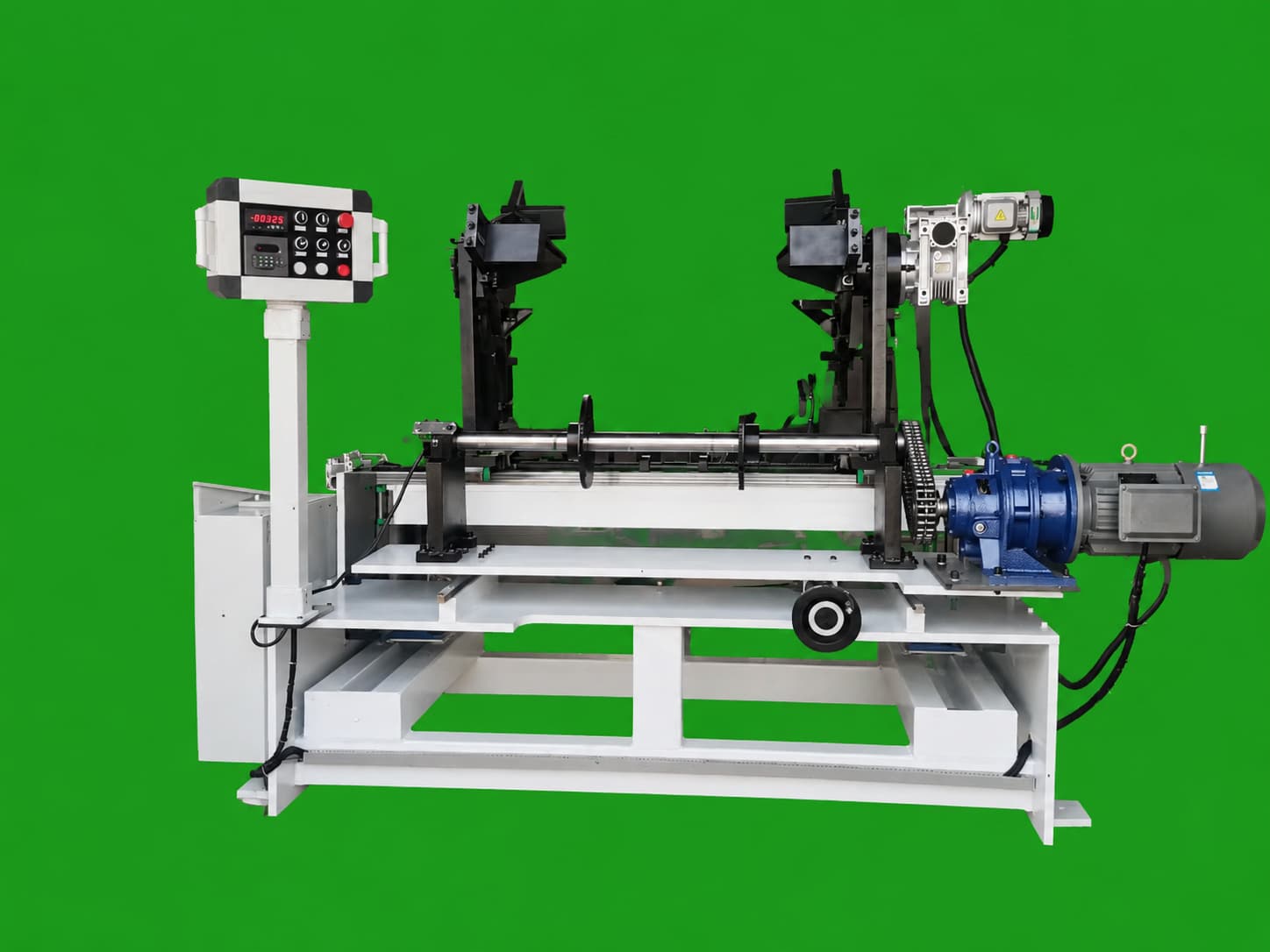
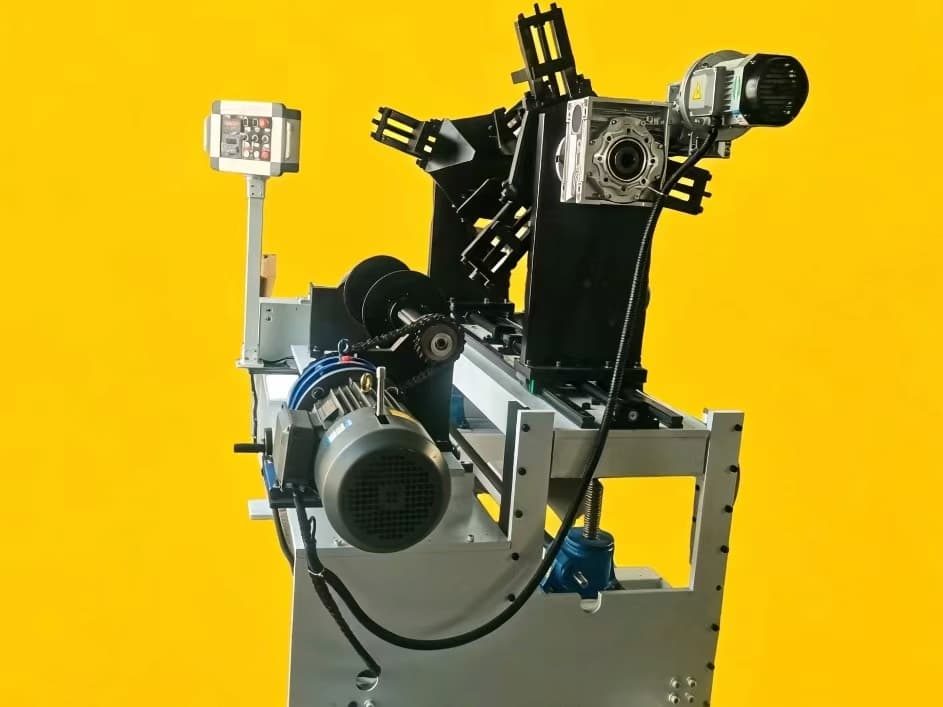
3D Wound Core Coil Winding Machine PCW-630
Bailipower Helps You Choose the Right Winding Machine and Use It More Efficiently
As global demand for energy-efficient transformers continues to grow, 3D wound core transformers are becoming increasingly popular in the power distribution industry. Compared with conventional laminated core transformers, they offer lower no-load losses, reduced noise, higher efficiency, and a more compact magnetic circuit.
High-quality transformers require not only excellent core manufacturing, but also precise and consistent coil winding. The quality of the winding process directly influences transformer performance, assembly accuracy, and long-term reliability.
Bailipower 3D Wound Core Coil Winding Machine PCW-630 is specifically designed for winding coils used in 3D wound core transformers. It is suitable for silicon steel wound core transformers, amorphous alloy wound core transformers, oil-immersed transformers, and dry-type transformers.
At Bailipower, we believe that supplying a machine is only the beginning. Our goal is to help customers choose the right winding machine and use it more efficiently, improving both production quality and manufacturing efficiency.
Why Choose the Bailipower PCW-630?
Many winding machines appear similar, but selecting the right equipment requires much more than comparing motor power or rotation speed.
Transformer designs vary considerably depending on:
Core material
Transformer capacity
Operating frequency (50 Hz / 60 Hz)
Voltage class
Cooling method
Insulation structure
Manufacturing standards (IEC, IEEE, ANSI, etc.)
Because of these differences, transformers with the same kVA rating may have completely different coil dimensions.
Instead of recommending machines according to transformer capacity alone, Bailipower recommends selecting a winding machine according to actual transformer geometry.
For the PCW series, the most important parameter is the Center Distance Between Three Core Columns.
For the PCW-630, this distance is 630 mm, which defines the machine model and its applicable winding range.
This geometry-based selection method enables customers to choose equipment more accurately and reduces the risk of selecting an unsuitable machine.
Designed Specifically for 3D Wound Core Transformers
The PCW-630 is a horizontal coil winding machine developed specifically for manufacturing coils used in 3D wound core transformers.
During production, three coil workpieces are mounted on the machine simultaneously. Each coil is wound individually while maintaining the same positioning reference, improving consistency among all three coils and reducing setup time.
The machine supports both copper and aluminum conductors and can be configured for round wire or flat wire according to production requirements.
A variable-frequency drive provides smooth stepless speed regulation, ensuring stable winding quality and easy operation across different coil sizes.
Multiple Control Options for Different Manufacturing Requirements
Different transformer manufacturers require different levels of automation.
To satisfy various production requirements and investment budgets, Bailipower offers three control configurations:
Electronic Counter Version
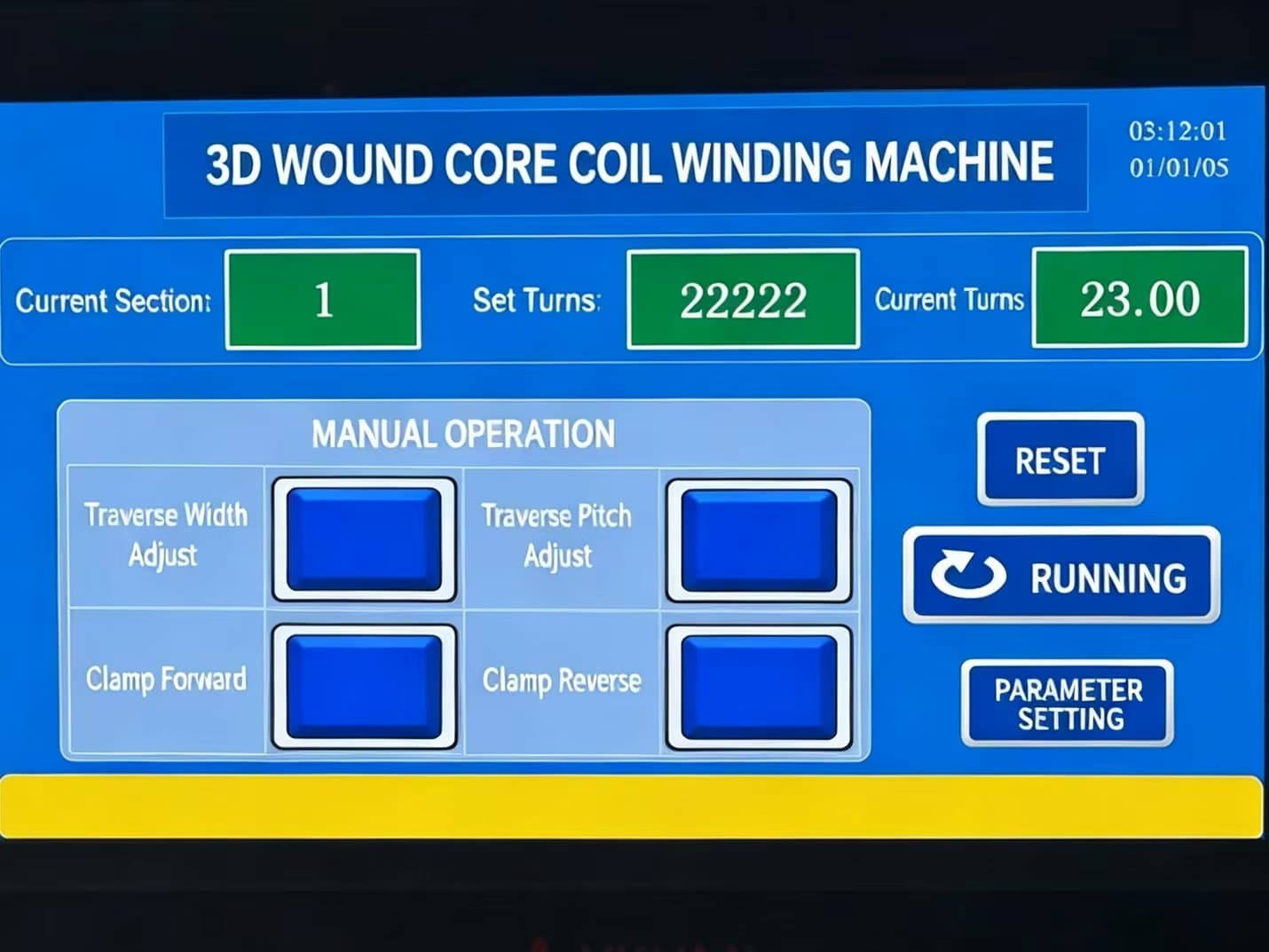
PLC Control Version
Servo CNC Version
The Electronic Counter Version provides a reliable and economical solution for standard production.
The PLC Version improves operating convenience and production management.
The Servo CNC Version offers higher positioning accuracy and advanced automation for demanding manufacturing environments.
Customers can select the configuration that best matches their production process.
Applications
The Bailipower PCW-630 is suitable for winding coils used in:
3D wound core transformers
Silicon steel wound core transformers
Amorphous alloy wound core transformers
Oil-immersed transformers
Dry-type transformers
Energy-efficient distribution transformers
Recommended Maximum Coil Outside Diameter: 570 mm
The machine is recommended for winding coils with an outside diameter of up to 570 mm, making it suitable for a wide range of 3D wound core transformer applications.
Geometry-Based Machine Selection
Many manufacturers classify winding machines according to transformer capacity.
However, transformer capacity alone cannot accurately determine machine suitability.
Transformers with identical power ratings may have different coil dimensions due to differences in:
Silicon steel or amorphous alloy cores
Oil-immersed or dry-type construction
Operating frequency
Voltage ratings
Insulation design
National standards
For this reason, Bailipower recommends evaluating the following parameters when selecting a winding machine:
Center Distance Between Three Core Columns
Coil Outside Diameter
Maximum Load Capacity
Adjustable Clamping Distance
This engineering-oriented selection method provides more reliable results than selecting equipment based solely on transformer capacity.
Helping Customers Use Winding Machines More Efficiently
Purchasing a machine is only one step in transformer production.
Bailipower also helps customers optimize manufacturing processes through practical engineering support.
Our technical services include:
Machine selection assistance
Process consultation
Equipment commissioning
Winding parameter optimization
Technical training
Customized machine solutions
Whether customers are producing standard distribution transformers or customized transformer designs, Bailipower is committed to providing practical and reliable support.
Why Choose Bailipower?
Bailipower is not simply a machine manufacturer.
We aim to become a long-term technical partner for transformer manufacturers worldwide.
Our philosophy is straightforward:
Help customers choose the right winding machine.
Help customers improve winding quality.
Help customers increase production efficiency.
Help customers reduce manufacturing costs.
Help customers achieve reliable long-term production.
As transformer technology continues to evolve, Bailipower will continue developing reliable winding solutions that meet the changing needs of the global transformer industry.
Technical Specifications
| Item | Specification |
|---|---|
| Product Name | 3D Wound Core Coil Winding Machine |
| Model | PCW-630 |
| Application | Winding coils for 3D wound core transformers |
| Center Distance Between Three Core Columns | 630 mm |
| Maximum Core Column Diameter (Theoretical) | Approx. 360 mm |
| Maximum Coil Outside Diameter (Theoretical) | 630 mm |
| Maximum Overall Diameter of Three-Coil Assembly (Theoretical) | 1358 mm |
| Recommended Maximum Coil Outside Diameter | 570 mm |
| Conductor Material | Copper / Aluminum |
| Conductor Type | Round Wire / Flat Wire |
| Maximum Load Capacity | 2000 kg |
| Adjustable Clamping Distance | 500–1200 mm |
| Main Motor Power | 4 kW |
| Speed Regulation | Inverter Stepless Speed Control |
| Rotation Speed | 0–120 r/min |
| Control Options | Electronic Counter / PLC / Servo CNC |
| Counting Function | Forward & Reverse Counting with Power-off Memory |
| Machine Dimensions (L × W × H) | Approx. 2100 × 1200 × 1400 mm |
| Machine Net Weight | Approx. 1600 kg |
| Power Supply | Customized according to customer requirements |
Frequently Asked Questions
Q1. What does PCW-630 mean?
A: The number 630 represents the Center Distance Between Three Core Columns, measured in millimeters. It is the primary geometric parameter used to define the machine model.
Q2. What types of transformers is the PCW-630 suitable for?
A: The machine is suitable for winding coils used in silicon steel wound core transformers, amorphous alloy wound core transformers, oil-immersed transformers, and dry-type 3D wound core transformers.
Q3. Why does Bailipower recommend selecting machines based on geometry instead of transformer capacity?
A: Transformers with the same kVA rating may have different coil dimensions because of differences in core materials, insulation structures, voltage classes, cooling methods, operating frequency, and applicable standards. Selecting a machine based on geometric parameters results in a more accurate and practical choice.
Q4. What is the recommended maximum coil outside diameter?
A: The recommended maximum coil outside diameter is 570 mm.
Q5. What conductor materials can the machine handle?
A: The machine supports both copper and aluminum conductors and can process round wire and flat wire, depending on the winding process.
Q6. What control systems are available?
A: Bailipower offers three control options:
Electronic Counter Version
PLC Control Version
Servo CNC Version
Customers can choose the most suitable configuration according to their production requirements.
Q7. Does Bailipower provide customized solutions?
A: Yes. We provide customized machines and technical solutions according to customer drawings, transformer specifications, production processes, and special manufacturing requirements.
Q8. How is the Maximum Load Capacity defined?
A: Maximum Load Capacity refers to the maximum allowable total weight of the complete three-coil workpiece mounted on the machine during the winding process.
Q9. Is the machine suitable for both 50 Hz and 60 Hz transformer production?
A: Yes. The PCW-630 can be used for transformer manufacturing in both 50 Hz and 60 Hz markets. Machine selection should be based on actual transformer geometry rather than frequency alone.
Q10. Why choose Bailipower?
A: Because Bailipower focuses not only on manufacturing winding machines but also on helping customers make informed equipment selections, optimize production processes, and improve long-term manufacturing efficiency through practical engineering support.