Previous
Next
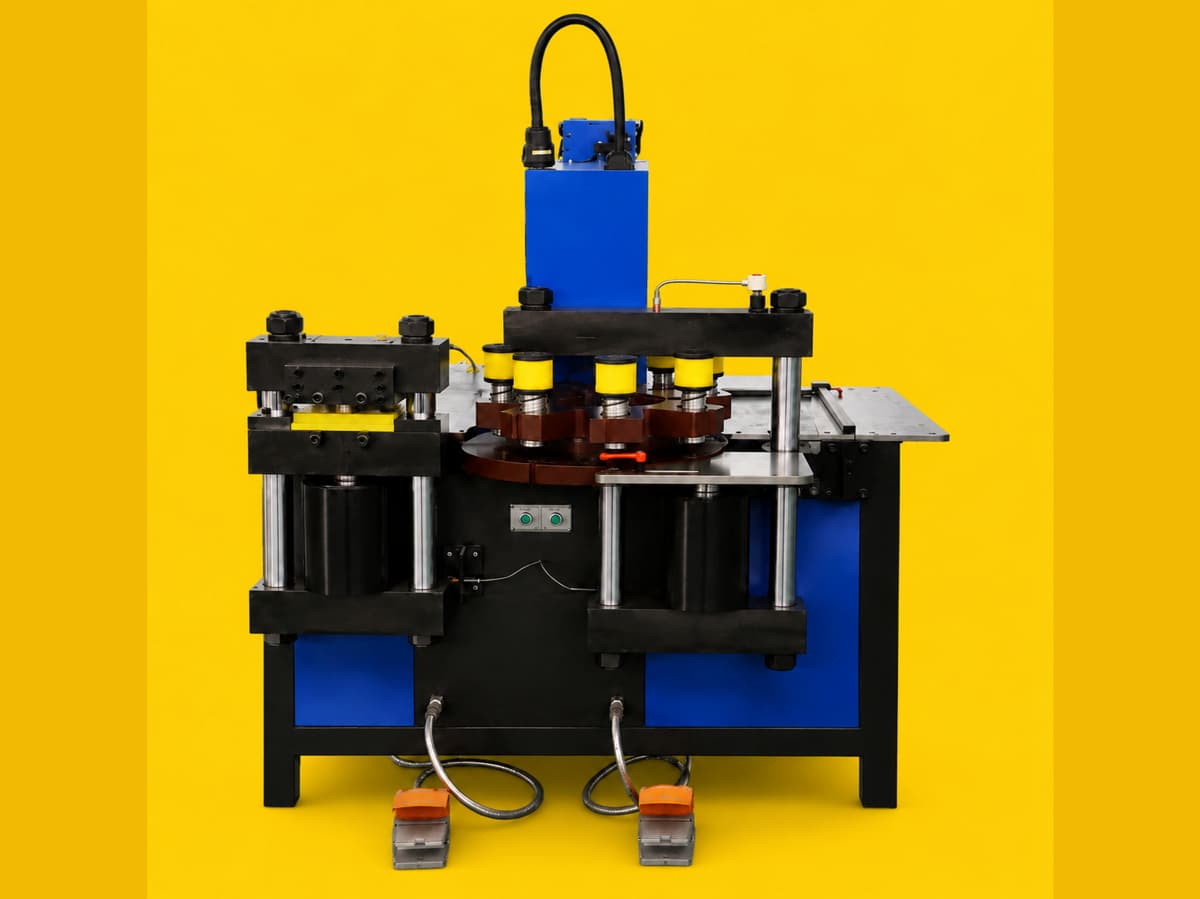
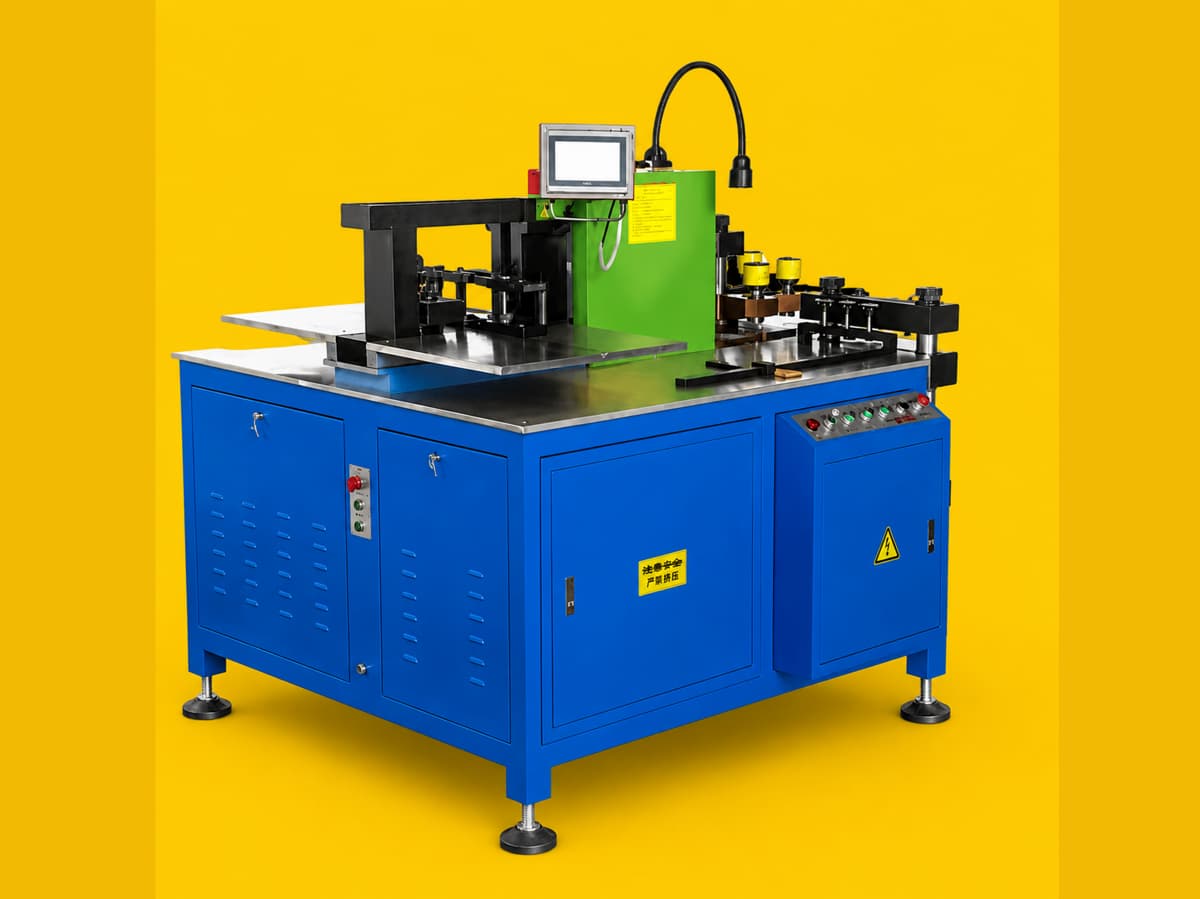
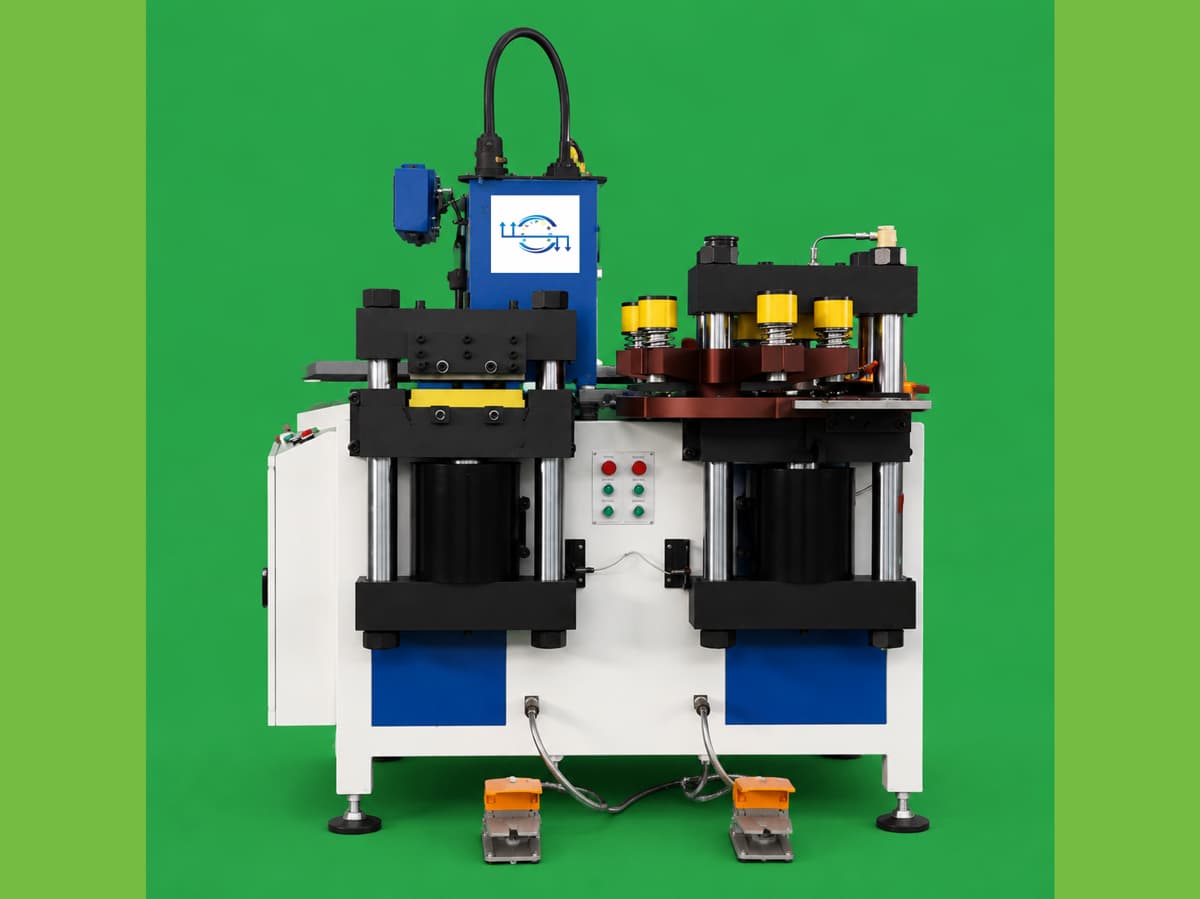
Three-Station Busbar Processing Machine PBM-503
1. 500 kN Class Busbar Processing Solution for Medium-Duty Electrical Manufacturing
In busbar processing, selecting the right machine is not only about maximum force. The most suitable solution should match the busbar size, production requirements, processing accuracy, and long-term manufacturing needs.
Bailipower focuses on helping customers choose the right busbar processing machine and helping customers use it better.
Three-Station Busbar Processing Machine PBM-503 belongs to the 500 kN Class of Bailipower busbar processing machines.
Designed for medium-duty electrical manufacturing applications, the PBM-503 integrates three independent processing systems:
Cutting System
Punching System
Bending System
It is designed for processing larger copper and aluminum busbars, supporting up to 250 mm busbar width and 20 mm thickness.
Compared with the PBM-303, the PBM-503 provides higher processing capacity and stronger mechanical performance for manufacturers requiring larger busbar applications.
2. Why Choose PBM-503?
The PBM-503 is designed for customers who need a reliable and practical busbar processing solution with higher capacity.
Main advantages:
500 kN Class busbar processing platform
Suitable for larger copper and aluminum busbars
Supports maximum busbar width up to 250 mm
Supports maximum busbar thickness up to 20 mm
Independent cutting, punching, and bending systems
5.5 kW drive motor for each processing system
Precise bending die linear displacement control
Flexible control system configurations
Suitable for various electrical manufacturing applications
3. Machine Structure
Three Independent Processing Systems.
The PBM-503 is commonly called a Three-Station Busbar Processing Machine according to industry terminology.
However, from an engineering perspective, the machine consists of three independent processing systems:
Cutting System
Punching System
Bending System
Each system has:
Independent drive motor
Independent hydraulic mechanism
Independent working tooling
Independent control logic
Although the three systems share one machine platform and control interface, each function can operate independently according to production requirements.
This design provides:
Better production flexibility
Easier maintenance
More practical operation
4. Technical Specifications
The Three-Station Busbar Processing Machine integrates three independent processing systems: Cutting System, Punching System, and Bending System.
Although these three systems are usually controlled by the same PLC and touch screen, each system has its own independent drive unit, hydraulic circuit, and operating logic. During production, the cutting, punching, and bending operations can be performed independently according to actual processing requirements, without a fixed sequence or interlocking relationship.
Therefore, the technical specifications of each system are listed separately. Parameters such as motor power, hydraulic force, and other drive-related specifications may be the same or different depending on the machine configuration and customer requirements.
This independent system design provides greater flexibility for machine customization, allowing customers to select suitable configurations according to different busbar sizes, processing requirements, and production conditions.
Three-station does not mean three sequential stations; it means three independent processing systems integrated into one machine.
4.1 Machine Overview
| Item | Specification |
|---|---|
| Product Name | Three-Station Busbar Processing Machine |
| Model | PBM-503 |
| Brand | Bailipower |
| Model Rating | 500 kN Class |
| Machine Structure | Three Independent Processing Systems |
| External Dimensions (L×W×H) | 2100 × 1600 × 1700 mm |
| Net Weight | 1800 kg |
| Packaging Method | Wooden Crate Packaging |
| HS Code | 846242 |
| Control System Options | Relay Control / PLC Control / PLC + Servo Positioning |
| PLC Brand | Siemens / Mitsubishi / Customized |
| Power Supply | 220V / 380V / 400V / 415V / Customized |
| Frequency | 50Hz / 60Hz |
4.2 Cutting System
| Item | Specification |
|---|---|
| Main Motor Power | 5.5 kW |
| Maximum Cutting Force | 800 kN |
| Maximum Busbar Width | 250 mm |
| Maximum Busbar Thickness | 20 mm |
| Control Logic Options | A1-3 / B1-10 (Optional) |
Cutting System Notes
The PBM-503 cutting system provides flexible control logic options according to different production requirements.
The selected control logic defines the movement sequence, stopping conditions, and return behavior during the cutting process.
Available options:
A1-3 Control Logic
B1-10 Control Logic
Different logic configurations allow customers to select the most suitable operating method according to operator habits, production requirements, and safety considerations.
For detailed explanations of cutting control logic, please refer to:
BOER-BM-01 Control Logic of Busbar Machines
4.3 Punching System
| Item | Specification |
|---|---|
| Main Motor Power | 5.5 kW |
| Maximum Punching Force | 500 kN |
| Maximum Busbar Width | 250 mm |
| Maximum Busbar Thickness | 20 mm |
| Punching Range | Ø4.3–Ø34 mm |
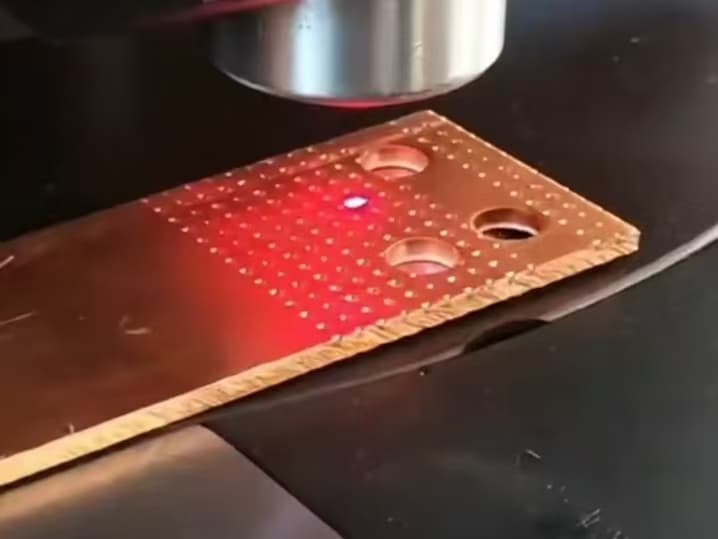
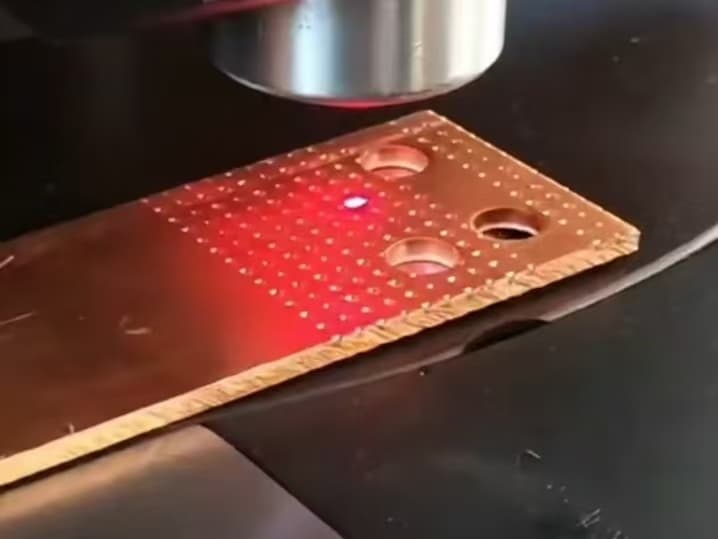
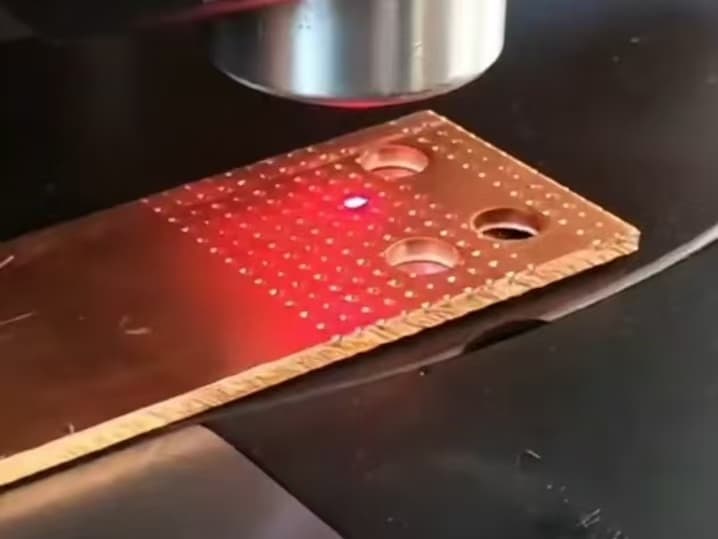
| Punching Positioning Method | Laser Lamp + Positioning Pin |
| Control Logic Options | A1-3 / B1-10 (Optional) |
Punching System Notes
The punching system of PBM-503 supports selectable control logic configurations.
The control logic determines how the punching movement is executed, including:
Forward movement control
Stopping method
Return movement control
Operator interaction requirements
Customers can select the appropriate logic according to production conditions and operating preferences.
For more technical information:
BOER-BM-02 Control Logic of Busbar Machines
Standard Punching Dies
Circular Holes
| No. | Size |
|---|---|
| 1 | Ø7 mm |
| 2 | Ø9 mm |
| 3 | Ø11 mm |
| 4 | Ø13 mm |
| 5 | Ø17 mm |
| 6 | Ø21 mm |
Oblong Holes
| No. | Size |
|---|---|
| 1 | Ø13 × 18 mm |
| 2 | Ø17 × 21 mm |
Additional punching dies, including customized dies, can be supplied according to production requirements.
4.4 Bending System
Precision Control Based on Bending Die Linear Displacement.
The PBM-503 bending system controls the bending process through accurate linear displacement positioning of the bending die.
Before operation, the system calculates the target die position according to:
Busbar parameters
Material characteristics
Tool parameters
Bending requirements
The hydraulic system then drives the bending die to the calculated position with encoder feedback.
| Item | Specification |
|---|---|
| Main Motor Power | 5.5 kW |
| Maximum Bending Force | 500 kN |
| Maximum Busbar Width | 250 mm |
| Maximum Busbar Thickness | 20 mm |
| Displacement Control Method | Wire-Type Encoder |
| Bending Die Linear Displacement Accuracy | ±0.05 mm |
| Typical Bending Accuracy* | ±1° |
| Repeat Bending Accuracy* | ±0.3° |
*Bending angle accuracy is provided as a reference value. Actual bending results depend on busbar material, thickness, width, tooling design, bending radius, and springback characteristics.
Standard Bending Dies
| No. | Type |
|---|---|
| 1 | Large Radius Flat Bend |
| 2 | Small Radius Flat Bend |
| 3 | U-Shaped Bend |
| 4 | Vertical Bend |
| 5 | Knurling |
5. Optional Configurations
The PBM-503 can be configured according to different production requirements.
Different configurations are not simply higher or lower versions. They are designed to match different manufacturing conditions.
5.1 Bending Structure Options
Open Bending Structure
Suitable for:
Standard busbar bending applications
Flexible tooling replacement
General production requirements
Closed Bending Structure
Suitable for:
Larger busbars
Higher bending support requirements
Applications requiring stronger mechanical stability
5.2 Control System Options
Relay Control
Suitable for:
Simple operation
Easy maintenance
Cost-effective production
PLC Control
Suitable for:
Digital parameter management
Flexible programming
Improved production consistency
PLC + Servo Positioning
Designed for customers requiring improved busbar dimension positioning efficiency.
Features:
Servo-controlled positioning to preset busbar dimensions
Higher positioning repeatability
Reduced manual measurement
Note:
The servo positioning system controls busbar dimension positioning. It does not replace manual material loading and feeding.
5.3 Tooling Options
Optional tooling includes:
Additional punching dies
Oblong hole dies
Customized punching dies
Customized bending dies
Special processing tools
6. Applications
The PBM-503 is suitable for:
Switchgear manufacturing
Power distribution equipment
Transformer electrical connection components
Industrial control cabinets
Renewable energy equipment
Electrical manufacturing industries
Applicable materials:
Copper busbar
Aluminum busbar
7. Frequently Asked Questions
7.1 What does PBM-503 mean?
PBM-503 represents Bailipower's 500 kN Class Three-Station Busbar Processing Machine.
The model rating represents the machine class, not the maximum force of one individual processing system.
7.2 What is the difference between PBM-303 and PBM-503?
The PBM-503 provides higher processing capacity:
| Item | PBM-303 | PBM-503 |
|---|---|---|
| Model Rating | 300 kN Class | 500 kN Class |
| Motor Power | 4 kW | 5.5 kW |
| Maximum Busbar Width | 160 mm | 250 mm |
| Maximum Busbar Thickness | 16 mm | 20 mm |
7.3 What is Bending Die Linear Displacement Accuracy?
It is the positioning accuracy of the bending die during the bending process.
Because the bending angle is affected by material and tooling conditions, linear displacement accuracy better represents the actual positioning capability of the machine.
7.4 Does PLC + Servo Positioning mean automatic feeding?
No.
The servo positioning system is designed for accurate busbar dimension positioning.
Material loading and feeding are still performed manually.
7.5 Why does Bailipower use "System" instead of "Station" in technical specifications?
Because cutting, punching, and bending are independent processing units with separate drive systems and control logic.
"Three-Station" is the common market name, while "System" describes the actual engineering structure.
7.6 Can PBM-503 be customized?
Yes.
Bailipower can customize:
Control system
Tooling
Bending structure
Electrical configuration
Processing requirements
7.7 Why Choose Bailipower?
A good busbar processing machine should not only provide high force.
It should provide the right balance between:
Processing capacity
Mechanical reliability
Control accuracy
Practical operation
Long-term production value
The PBM-503 represents Bailipower's philosophy:
Help customers choose the right machine. Help customers use it better.