In the field of busbar processing, bending precision is one of the most critical indicators for evaluating a busbar machine. It directly affects the quality of copper and aluminum busbars and ultimately influences the safety and reliability of electrical power systems. However, for many years, a common misunderstanding has existed in the industry: bending accuracy of a busbar machine is often described simply as “±X degrees.” Although this expression seems intuitive, it does not reflect the real working principle of a busbar bending machine and can easily mislead customers during machine selection and operation.
Based on years of technical experience, Bailipower believes that the bending precision of a busbar machine should be defined by die displacement accuracy, not angle error. Using displacement precision as the core standard allows customers to choose the right machine more scientifically and operate it more efficiently.
The Fundamental Difference Between Busbar Machines and Rotary CNC Equipment
To understand why angle accuracy is not suitable for busbar machines, it is necessary to look at how bending is actually generated.
In CNC lathes or rotary bending machines, bending is performed around a single axis of rotation. The relationship between motion and angle is direct, based on analytic geometry. Because the rotation angle directly determines the final bending angle, it is reasonable to describe precision in degrees.
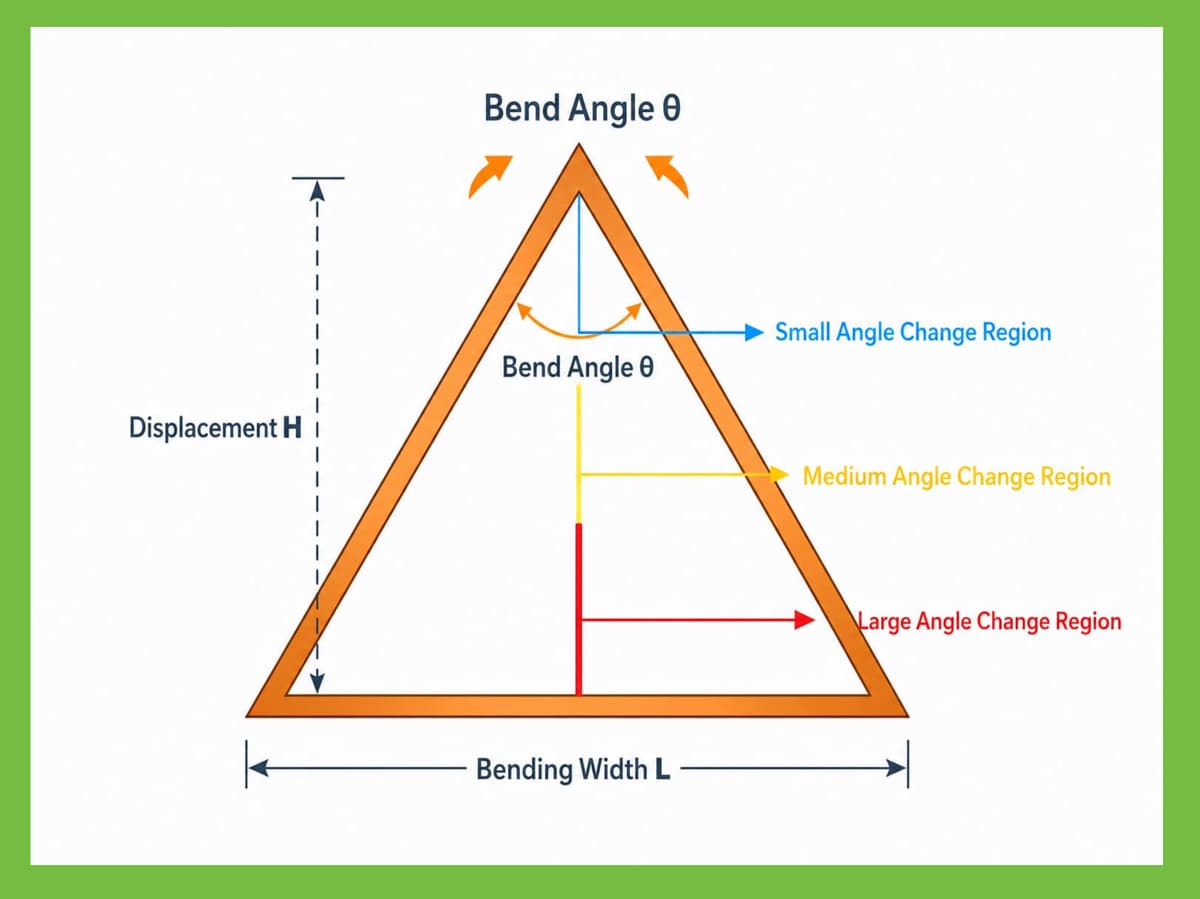
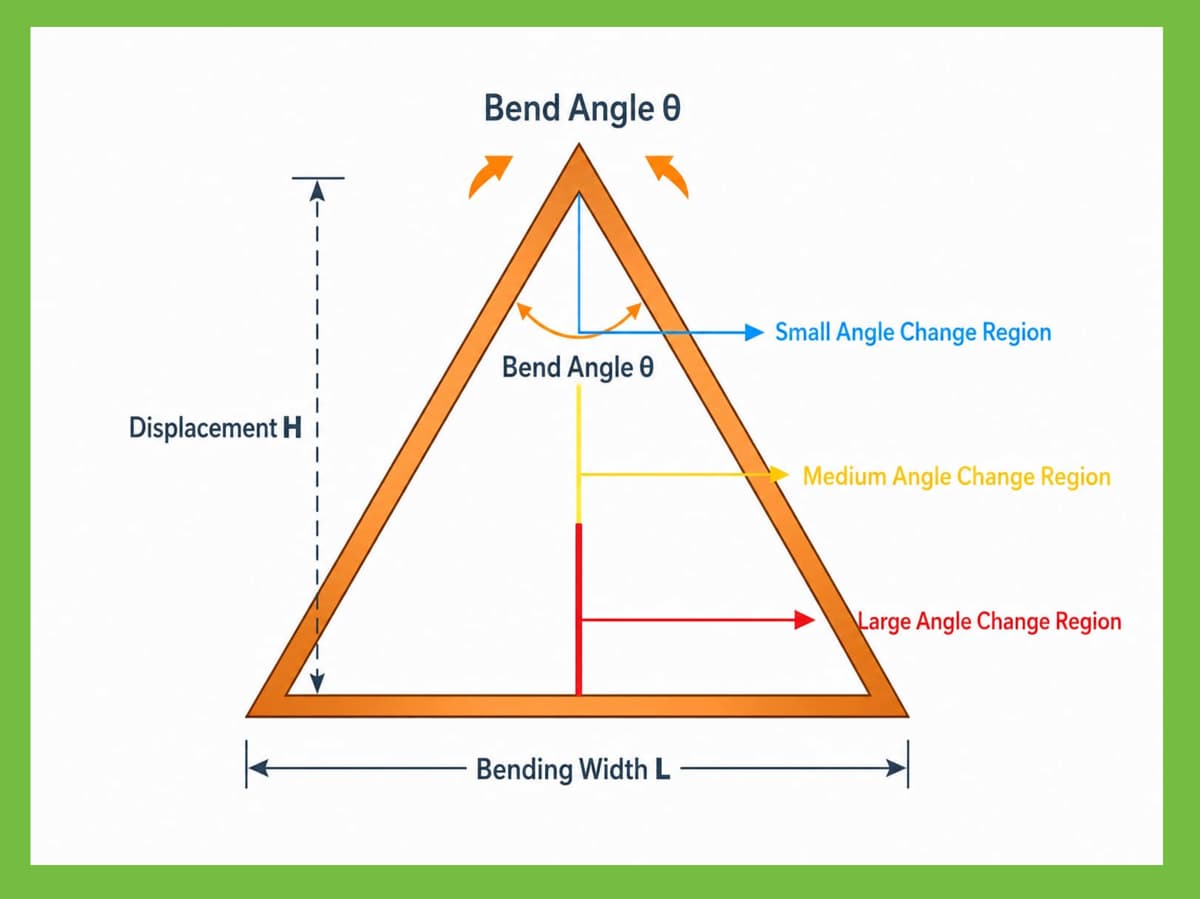
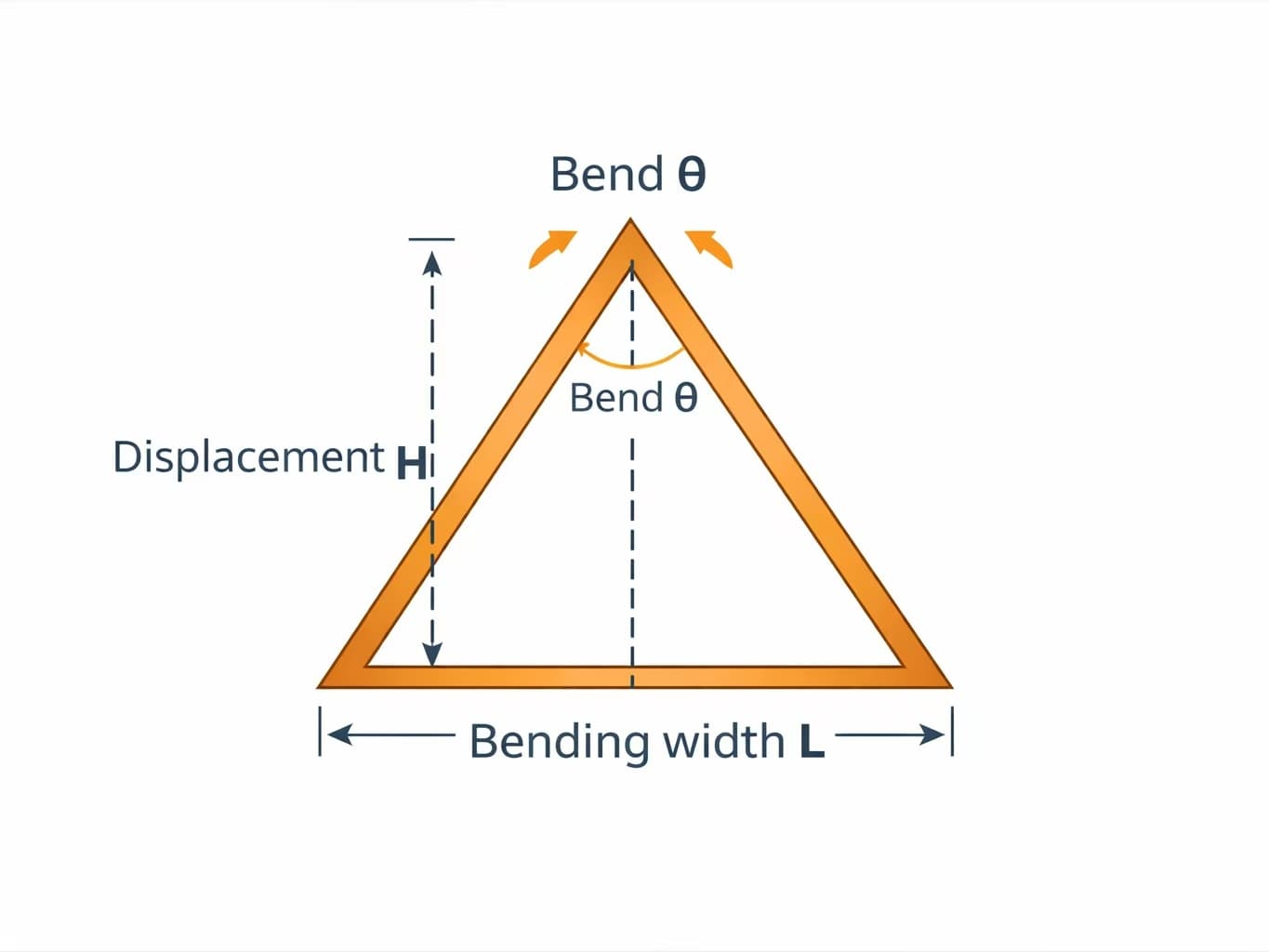
Busbar bending machines work in a completely different way. Instead of rotating around a fixed axis, the bending angle is formed indirectly through linear displacement of the bending die, which creates a triangular geometric relationship between the die, the busbar, and the bending point. The final angle is calculated from displacement using trigonometric relationships.
This means the bending result depends on multiple variables, including:
Die width (triangle base)
Material thickness
Material hardness
Springback of copper or aluminum
Structural rigidity of the machine
Servo control accuracy
Because the angle is not generated directly, the same displacement can produce different angles when the die width changes. Therefore, describing machine precision only by angle error has no real technical reference value.
Why Angle-Based Accuracy Can Mislead Customers
Using angle tolerance such as “±0.5°” may sound precise, but for busbar machines, it often causes confusion during both machine selection and actual operation.
1. Problems During Machine Selection
When customers compare machines, they may see similar angle accuracy values from different manufacturers and assume the machines have the same performance. In reality, the machines may have completely different servo systems, structures, and displacement control capabilities.
A machine that claims high angle precision may still produce unstable bending results if its displacement control is not accurate enough. Customers may purchase equipment that looks precise on paper but performs inconsistently in real production.
This problem becomes more serious when different dies are used. Because angle error changes with die width, the customer cannot judge the true accuracy of the machine if only angle tolerance is provided.
2. Problems During Machine Operation
Angle-based calibration makes daily operation more complicated. Operators often need to repeatedly adjust parameters to reach the required angle, especially when changing materials or die sizes.
Frequent recalibration leads to:
Lower production efficiency
Higher material waste
Increased labor time
Inconsistent product quality
In high-precision applications such as switchgear manufacturing, power distribution cabinets, or renewable energy systems, even small bending errors can cause poor contact, overheating, or short circuits. These risks increase maintenance costs and may even affect electrical safety.
Displacement Accuracy: The Correct Standard for Busbar Machines
Bailipower recommends that the industry adopt die displacement accuracy as the core precision standard for busbar bending machines.
Displacement accuracy reflects the real capability of the machine, because it depends on the overall performance of:
Servo drive system
Ball screw and guide mechanism
Machine frame rigidity
CNC control algorithm
Die structure stability
Unlike angle tolerance, displacement precision does not change when the die size changes. It is a stable and reliable parameter that truly represents machine performance.
For example, when a machine is specified with ±0.05 mm displacement accuracy, the customer can clearly understand the precision level regardless of which die is used. This makes comparison between machines much more objective.
How Displacement Accuracy Helps Customers Choose the Right Machine
For customers purchasing a busbar machine, understanding displacement precision can greatly improve decision-making.
When selecting equipment, customers should:
Focus on displacement accuracy instead of angle tolerance
Check the servo system brand and control resolution
Evaluate machine structure rigidity
Confirm die compatibility and stability
Avoid machines that only provide angle error parameters
A machine with high displacement precision will maintain consistent bending quality across different materials, die widths, and batch sizes. This ensures stable production and reduces long-term cost.
Choosing the right machine at the beginning prevents many future problems, including repeated adjustments, quality defects, and unexpected downtime.
How Displacement Accuracy Helps Customers Use the Machine Better
Displacement-based control also makes operation easier.
When the machine is calibrated using displacement values, the operator does not need to constantly calculate angle conversions. Once the correct displacement value is determined for a specific die and material, the same setting can be reused with high repeatability.
This brings several advantages:
Faster setup time
Less operator experience required
Higher consistency between batches
Lower scrap rate
More stable product quality
For factories with large production volumes, this difference can significantly improve efficiency and reduce operating cost.
In high-precision industries such as power equipment, rail transit, and new energy systems, stable bending accuracy is essential. Using displacement precision as the reference ensures every busbar meets the required tolerance.
A Necessary Step for Industry Standardization
Standardizing busbar machine accuracy using displacement precision is not only a technical improvement, but also a necessary step for the development of the industry.
Clear and scientific parameters help customers understand equipment performance, reduce misunderstanding, and promote fair comparison between manufacturers.
Bailipower has long insisted on using displacement accuracy as the core precision standard. Through continuous improvement in servo control, mechanical design, and CNC algorithms, Bailipower machines provide stable and reliable bending performance under different working conditions.
Our goal is not only to manufacture machines, but also to help customers:
Choose the right busbar machine
Use the machine correctly
Achieve stable production quality
Improve efficiency and safety
Conclusion
The long-standing habit of describing busbar machine accuracy by angle tolerance has created confusion in the market. Because busbar bending is generated through displacement and trigonometric calculation, angle error alone cannot represent the true precision of the machine.
Using die displacement accuracy as the core standard allows customers to evaluate equipment more scientifically, select machines more confidently, and operate them more efficiently.
Bailipower encourages the industry to move beyond the “angle myth” and adopt displacement precision as the new benchmark for busbar machines. With the right standard, customers can select better equipment, achieve more reliable production, and ensure the safety and quality required in modern power engineering.